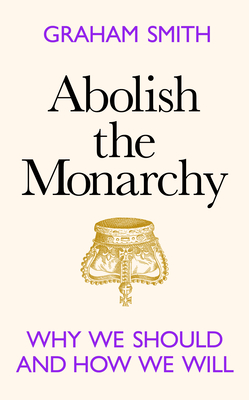
For the purposes of transparency, I’ll state that I’ve been anti-monarchist for my entire adult life. It is with the death of Elizabeth that I became ardently anti-monarchist. I wish Smith’s book had been around much earlier, I would not have wasted time waiting to take up the cause; I would have started years ago.
Even in my most evangelical of days as a teenager (I really must have been insufferable in my religious fervour) I could see that the belief the monarchy was somehow ‘God-given’ was simply not true. There is no biblical basis for it whatsoever. Charles, even before Diana’s death, was clearly a selfish fool and his father was already infamous for his foul faux pas. In more recent times we’ve seen Charles can’t even deal with a pen without having a hissy fit.
But I held off any strong public declaration of wanting to see the monarchy abolished out of respect for Elizabeth whom, I had already been led to believe, was doing a great service for the country in all the work she did with leaders around the world. Plus, there were always the arguments that the monarchy bring in huge revenues in tourism and that the British public overwhelmingly loved the royal family. And in the end, they don’t have any power, surely, so it does no harm to keep them. All good stuff, right?
Wrong. Graham Smith’s book systematically dismantles all the classic arguments including those I’ve mentioned above. With accurate statistics, primary source material and interviews where he and his team have faced up to the relevant authorities and gleaned the truth out of them, Smith demonstrates how all the classic excuses for keeping the monarchy are not just mistaken – they’re plain wrong.
I found myself saddened that I waited so long to join groups like Smith’s Republic. I should have done this years ago. Elizabeth was not doing the good work I thought she was, and in all this time, the royal family have definitely wielded power. But it isn’t that any of them did anything bad, per se – although Smith points out that at times they definitely did – it is that there is no moral, economic, political or even historical reason why we need to keep this corrupt institution in place. Indeed, if anything, it is imperative we get rid of them as soon as possible. The monarchy, Smith argues, is hindering our democracy.
If there is a weakness, in my view, where Smith can be attacked, it is in the presentation of an agenda for change and how our constitution can be prepared for a republican democracy. He sets out a vision for the future that I could see easily dismissed by critics because he isn’t a politician and so can’t possibly know how the parliamentary machine could work. Just for fun, I looked at some reviews criticising this book. In every case it was obvious the reviewer had never read the book at all and had just decided that Smith must have ignored all these classic arguments (because they’re so strong, right?). But in most cases too, they accused him of offering no alternative – again showing they hadn’t read the book – but also showing his outline for the future isn’t a weakness at all. It is exactly what royalists are claiming isn’t possible. They’re wrong, and Smith’s notions are compelling. Again, he draws on primary sources to demonstrated that the shift from monarchy to republic would be a relatively simple task. It is hard not to be convinced.
This book then is the ultimate tool for anti-monarchists like myself to use. My only wish is that the author will produce a cheat sheet of all the stats and arguments summarised and ready to either draw on – when doing demonstrations or in discussions on the streets – or, better still, commit to memory. Luckily I have a book which will help anyone wanting to do that!
Perhaps what is most encouraging about this book is Smith’s arguments against the contention that most people want the monarchy to continue. The figures have come down over recent years so that even royalists admit it is close to half the country wanting to be rid of the institution. Their argument is the old classic ‘now is not the time’ when it comes to demands for a referendum. Wait until the consensus is much greater and don’t make a fuss now, they argue, ignoring the fact that much of the change in opinion has come through the efforts of people like Graham Smith, campaigning for years. Smith counters this argument brilliantly in essence showing that there is a great difference between being actively in favour of something and passively being ok with it continuing. This is the crux of the matter: it is likely that those who truly want to keep the monarchy are actually now in the minority.
So the time is now, Smith tells us. He’s not wrong, and this book is the weapon you need if you want to join the growing call for ending this abhorrent institution.
UPDATE
When I was writing this, the Republic team were busy staging a demonstration inside Buckingham Palace. It went off brilliantly and peacefully and all the press covered it; with one noticeable exception. One day later when you google it, there’s no BBC coverage. There’s nothing on their news app either. CNN and other foreign news outlets have taken it as has all our press. Radio silence from the Beeb.
Graham Smith claims in this book that the BBC is horribly biased in favour of the royal family. It is difficult to know. Left wingers say the BBC is right wing (they certainly made lots of supposed ‘mistakes’ during the 2019 election all to the detriment of Labour) while Boris Johnson claimed straight after the same election they were far too left wing! I can only assume that was because their comedy programmes do indeed lean that way. The BBC themselves always say that as long as both sides are claiming they are biased then they are doing the right work. There’s some truth in that.
But when a major outlet completely ignores the work of the Republic or consistently attempts to downplay the growing call for the end to the monarchy, you have to wonder if Smith isn’t bang on the nail here. There’s no excuse for this story to be buried. The fact that is has been, by this single news outlet, is damning.
My verdict:

Social Entrepreneur, educationalist, bestselling author and journalist, D K Powell is the author of the bestselling collection of literary short stories “The Old Man on the Beach“. His first book, ‘Sonali’ is a photo-memoir journal of life in Bangladesh and has been highly praised by the Bangladeshi diaspora worldwide. Students learning the Bengali language have also valued the English/Bengali translations on every page. His third book is ‘Try not to Laugh’ and is a guide to memorising, revising and passing exams for students.
Both ‘The Old Man on the Beach’ and ‘Sonali’ are available on Amazon for kindle and paperback. Published by Shopno Sriti Media. The novel,’The Pukur’, was published by Histria Books in 2022.
D K Powell is available to speak at events (see his TEDx talk here) and can be contacted at dkpowell.contact@gmail.com. Alternatively, he is available for one-to-one mentoring and runs a course on the psychology of writing. Listen to his life story in interview with the BBC here.
Ken writes for a number of publications around the world. Past reviewer for Paste magazine, The Doughnut, E2D and United Airways and Lancashire Life magazine. Currently reviews for Northern Arts Review. His reviews have been read more than 7.9 million times.
Get a free trial and 20% off Shortform by clicking here. Shortform is a brilliant tool and comes with my highest recommendation.

Social Entrepreneur, educationalist, bestselling author and journalist, D K Powell is the author of the bestselling collection of literary short stories “The Old Man on the Beach“. His first book, ‘Sonali’ is a photo-memoir journal of life in Bangladesh and has been highly praised by the Bangladeshi diaspora worldwide. Students learning the Bengali language have also valued the English/Bengali translations on every page. His third book is ‘Try not to Laugh’ and is a guide to memorising, revising and passing exams for students.
Both ‘The Old Man on the Beach’ and ‘Sonali’ are available on Amazon for kindle and paperback. Published by Shopno Sriti Media. The novel,’The Pukur’, was published by Histria Books in 2022.
D K Powell is available to speak at events (see his TEDx talk here) and can be contacted at dkpowell.contact@gmail.com. Alternatively, he is available for one-to-one mentoring and runs a course on the psychology of writing. Listen to his life story in interview with the BBC here.
Ken writes for a number of publications around the world. Past reviewer for Paste magazine, The Doughnut, E2D and United Airways and Lancashire Life magazine. Currently reviews for Northern Arts Review. His reviews have been read more than 7.9 million times.
Get a free trial and 20% off Shortform by clicking here. Shortform is a brilliant tool and comes with my highest recommendation.


 Write Out Loud (Reviews and Writing)
Leave a comment