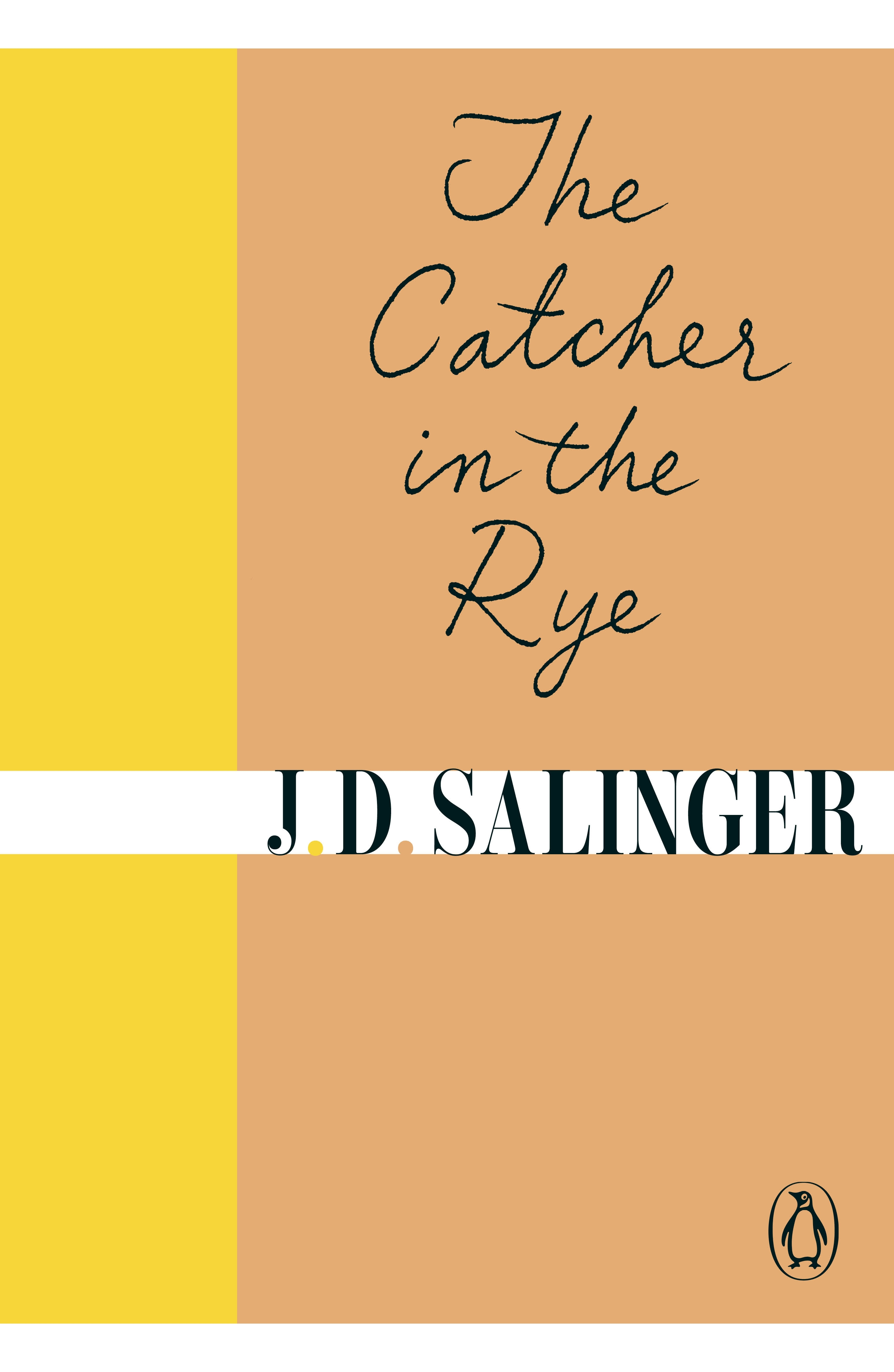
“…none of the characters evoke any kind of sympathy, let alone empathy…”
I write this following review knowing that it is very likely I will face severe backlash – in the court of social media, if nothing else. Recalling the vitriol I faced over saying Lolita should be banned in my commentary on the 100 Great Novels list recently, I would be amazed if I get anything less for talking about a book that has none of the troubling issues of Lolita and is beloved by Americans and Brits alike.
Nevertheless, having intended to read this novel for such a very long time, and now having finally done it, it would be absurd not to share my thoughts. Plus, ultimately, I don’t really care if people get angry. You can’t please everybody…
I’ll start by saying that there is much to praise about the book. Originally published in serial form in magazines from 1945 onwards and released as a full novel in 1951, the modernist feel of the writing is unblemished more than eighty years later. This is a book that could be published today. Though written chronologically, there is no real sense of beginning, middle or end; we get little more than a couple of days in the life of troubled teenager, Holden Caulfield, as he leaves the school that he’s been thrown out of and wanders the streets of New York, eventually making his way home. It’s not quite Samuel Beckett’s ‘nothing happens, twice’ but there’s something rather Godot-like about the whole novel.
And as such, this is a novel ripe for literary analysis. I can imagine decades of A-level and university students working themselves up to a frenzy writing essays about Salinger’s ‘masterpiece’. It’s full of themes and imagery that you can waste tens of thousands of words on: alienation, loneliness, fake versus authentic, innocence versus the adult world, grief, trauma, identity, abuse, coming of age, mental health. You could make a career out of analysing this book.
But.
Despite being there, having studied literary criticism at university and having taught English Literature for the best part of the last twenty years, I am deeply cynical about the techniques used to analyse stories. Such work should always be subservient to the purpose of the novel – to tell a story and move or change the reader, in doing so. There are various ways to express this and subtle variations depending on each person’s motivations for reading stories at all, and that’s fine. My main criteria – coming from my interest in people and their behaviour – boil down to (a) do I care about the characters by the end of the story and (b) did I enjoy the journey to get there?
While I’ve been accused (again, on social media) of being ‘shallow’ for this, I think it is really important. If you want to make people think deeply and be wowed by your intelligence, go write a philosophical essay. If you’re writing a novel, or short story, or play, or film script, you are – primarily – writing a story to entertain. Yes, it might be full of deeply philosophical points too, it might be serious, it might be immensely intellectual, but it must be worth reading as a story. Otherwise, what is the point?
There are many writers who, in my opinion, tell lies when writing their novels because they’re not interested in the story; the story is simply the device for carrying their thoughts and opinions. You’re lying to the reader if you do this. I would, controversially, put Milan Kundera into this category (yes, I know, don’t come at me for that…) Salinger is, for me, borderline guilty of this.
The big problem I have with The Catcher in the Rye is that none of the characters evoke any kind of sympathy, let alone empathy from me, least of all the protagonist and narrator himself. I don’t know if well-to-do 1940s New York teenagers were all miserable, self-obsessed wallies like Holden Caulfield, but he certainly is, and he comes across as tedious and pompous. I did hope, once we finally found out what the title means, near to the end of the novel, that it might click for me and open the door to enjoyment, but no. The idea was great. A different character and the revelation of the name of the book could have been awesome. But by that point, I was utterly fed up with Caulfield’s drivel.
I’m told this is a fantastic coming-of-age novel that really resonates with teenagers but if that is true then God help us. The thousands of teenagers that I’ve worked with as a teacher over the last thirty-four years were nothing like this boy. If they had been, I would have left the profession! Caulfield is a bored little rich boy with a superiority complex, who has got his own way for far too long and been spoiled. In today’s world he would have been one of those annoying prats who have a victim mentality and want to blame their bad behaviour on every trauma they’ve ever had, most of which is likely to be that somebody once told them off as a child or something like that.
The other characters are no better. They are wooden and two-dimensional – especially the female characters, who Caulfield treats as automatons that are only there to please him. The slightest deviation from what he expects of them turns him into a hateful idiot. We get no opportunity to get to know these characters in any real sense and so we’re left completely unaffected by their exits along the way.
The only character we get any sense of feeling for is Caulfield’s little sister, Phoebe. We get more sympathetic writing with her and the character is fleshed out a little more, though her personality seems a little too mature for her supposed age. Nevertheless, Salinger has his protagonist behave unbelievably cruelly towards her considering he’s meant to dote on her. Even this one person in the world he’s supposed to love he can’t treat with any real sense of respect or understanding, and there’s a feeling of ‘Little Nell-ing’ the character for no good reason.
And what do we learn from all this? Absolutely nothing. There is an element of deliberately giving no answers and failing to tie up loose ends, to be sure, but on the whole it feels like the author didn’t really know where he was going with this. He simply wanted to get in the head of a young teenager and relive versions of his own youth for a while. But Caulfield is a caricature of that period, a warped mirror of that time.
I suspect that young people studying the text today as teenagers will see certain aspects of the narrator in themselves and enjoy all the clever stuff they will learn in class about the book – the same effect comes from reading other short novels such as Animal Farm, A Christmas Carol and so on – and this will perpetuate the reputation of this being a ‘great book’. And any adult reading it who thinks it is a superb recreation of teenage angst has either forgotten what it was really like to be a teenager or must have been an absolutely unbearable sod when they were young.
So, nicely written though The Catcher in the Rye is – and well done to the author for constructing lots of themes and motifs that get the literary buffs hot – this book is not, for me, a classic. Sure, read it, should this kind of writing take your fancy, but please don’t think this in anyway reflects the minds of young people either now or back then. If the idea of a tediously selfish, snobbish brat doesn’t put you off, you may well thoroughly enjoy a well-constructed book. Otherwise, let me say – so there is no doubt – you’re not missing out if you never turn a page of it. There’s much better out there.
My Verdict:

Social Entrepreneur, educationalist, bestselling author and journalist, D K Powell is the author of the bestselling collection of literary short stories “The Old Man on the Beach“. His first book, ‘Sonali’ is a photo-memoir journal of life in Bangladesh and has been highly praised by the Bangladeshi diaspora worldwide. Students learning the Bengali language have also valued the English/Bengali translations on every page. His third book is ‘Try not to Laugh’ and is a guide to memorising, revising and passing exams for students.
Both ‘The Old Man on the Beach’ and ‘Sonali’ are available on Amazon for kindle and paperback. Published by Shopno Sriti Media. The novel,’The Pukur’, was published by Histria Books in 2022.
D K Powell is available to speak at events (see his TEDx talk here) and can be contacted at dkpowell.contact@gmail.com. Alternatively, he is available for one-to-one mentoring and runs a course on the psychology of writing. Listen to his life story in interview with the BBC here.
Ken writes for a number of publications around the world. Past reviewer for Paste magazine, The Doughnut, E2D and United Airways and Lancashire Life magazine. Currently reviews for Northern Arts Review. His reviews have been read more than 7.9 million times.
Get a free trial and 20% off Shortform by clicking here. Shortform is a brilliant tool and comes with my highest recommendation.


Leave a Reply